
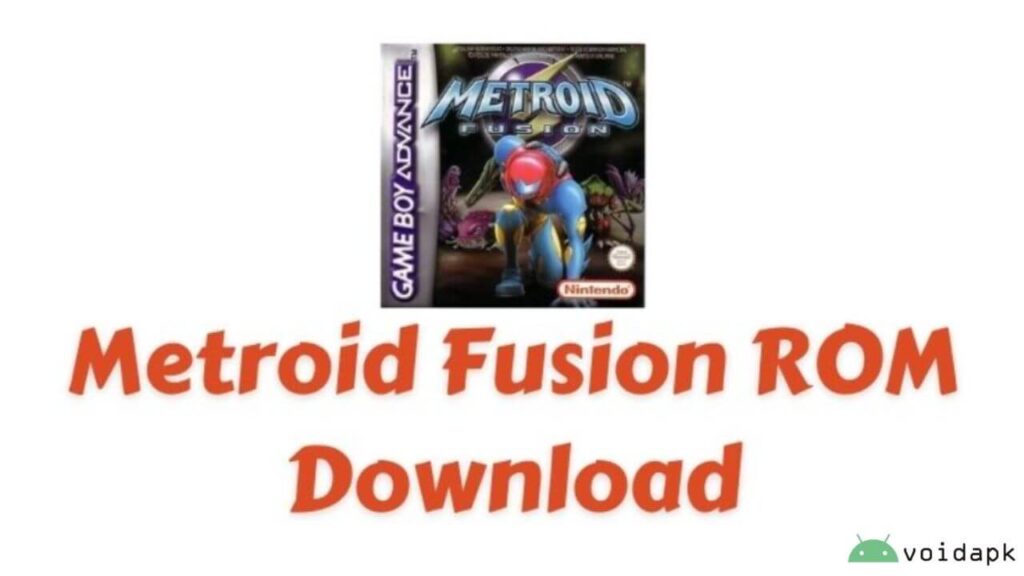
If you are a fan of classic Nintendo titles on handheld consoles, Metroid Fusion is a must-play adventure. Released in 2002 for the Game Boy Advance (GBA), Metroid Fusion was internally referred to as Metroid IV during development, marking the direct chronological continuation after Super Metroid on the SNES. It was the first Metroid title to arrive after a six-year gap, and to this day, it retains a reputation as one of the most atmospheric and linear entries in the franchise.
Thanks to the enduring retro gaming scene, gamers still search for the Metroid Fusion ROM for GBA FlashAdvance to relive Samus Aran’s battle against the X Parasites on modern emulators or original hardware with flash cartridges. Let’s dive deep into its features, gameplay mechanics, storyline, and interesting facts that make Metroid Fusion one of the most memorable Nintendo releases of the early 2000s.
Introduction to Metroid Fusion
Metroid Fusion released for the Game Boy Advance on November 18, 2002, revitalized the franchise after a long hiatus. Unlike its predecessors, Fusion adopted a much more linear structure, guiding players through missions assigned by a central AI known as Adam. This made exploration more controlled compared to the open-ended sequence breaking of Super Metroid.
At its heart, the game continued to offer the beloved 2D side-scrolling action platforming that defined the series, while also weaving in a darker, more cinematic narrative. The new “Fusion Suit” made Samus visually distinct and highlighted her changed physiology after a life-threatening infection.
When paired with Metroid Prime (which released alongside it on the GameCube the same day), Fusion showed that Nintendo was prepared to bring Metroid back in style, across both handheld and home console audiences.
Features of Metroid Fusion GBA ROM
Metroid Fusion stands out from other GBA titles with its gameplay innovations and unique design approach. Here are some defining features players love:
1. Linear Story-Driven Gameplay
Unlike earlier Metroid titles, Fusion emphasizes mission-based progression. Instead of rewarding random exploration early, the game guides Samus sector by sector. This was both praised by new players and critiqued by veterans who enjoyed complete freedom in past entries.
2. The Fusion Suit
Samus’s Power Suit is surgically altered into the Fusion Suit after she is infected by the X Parasite. This suit changes her abilities permanently, making her weaker to cold but stronger against parasite threats. The design itself is iconic – slender, biomechanical, and alien-like.
3. SA-X: A Terrifying Nemesis
One of the most memorable aspects of Fusion is the SA-X, an enemy that is effectively a clone of Samus in her fully-upgraded state. The tension of being hunted by something more powerful than the player created a survival horror atmosphere rarely seen in Nintendo games at the time.
4. Classic Power-Ups and Weapons
Fusion still retains classic upgrades such as the MISSILE EXPANSIONS, ENERGY TANKS, POWER BOMBS, and iconic BEAMS (Wave, Plasma, and Ice alternatives). Interestingly, some upgrades are acquired differently, and certain power-ups have altered functions based on Samus’s DNA-influenced biology.
5. High Replay Value
The game allows completion with minimal item collection. Speedrunners quickly adopted Fusion as a core challenge, attempting low-percent runs and time attacks. Some players even recorded perfect runs on original cartridges using tool-assisted emulation to clock times under 27 minutes!
Storyline and Plot Summary
The plot of Metroid Fusion follows Samus Aran after she is infected by the dangerous X Parasite during a mission on SR388. Near death, she is saved by doctors who create a vaccine from her Metroid offspring’s DNA. This treatment removes the infection but changes her permanently, giving her the ability to absorb X Parasites for health and missile refills.
Samus is then sent to the Biologic Space Laboratories (BSL) station, where she discovers that the X Parasites have spread, infecting creatures and replicating their DNA. The SA-X, a clone born from Samus’s infected Power Suit, now roams the station as the most dangerous threat – possessing all her fully upgraded abilities while showing no emotion.
Throughout the game, Samus navigates six main sectors of the station, guided by Adam, her AI assistance system. Eventually, she learns that the Galactic Federation intends to study the X for weaponization, echoing sinister corporate ambition reminiscent of the Alien franchise.
In an emotional climax, Samus decides to trigger the space station’s self-destruct sequence, sacrificing everything to eliminate the X threat permanently. The escape sequence and showdown with the Omega Metroid serve as thrilling finales, cementing Fusion as one of the darkest yet most rewarding chapters in the Metroid series.
Gameplay Differences from Other Metroid Games
- Mission-Based Progression – Fusion reduces random exploration, unlike Super Metroid which allows significant sequence breaking.
- Parasite Absorption – Instead of item drops, health and missiles are replenished by absorbing parasites.
- Cold Vulnerability – Because of her new DNA, Samus suffers more from cold damage.
- Map Systems – Navigation Rooms automatically supply maps, acting as simplified map stations.
- Cinematic Storytelling – Cutscenes and dialogue play a larger role in Fusion than any past 2D Metroid entry.
Metroid Fusion vs. Metroid Dread
With the release of Metroid Dread in 2021, fans immediately compared the two games. In many ways, Dread is considered the direct sequel to Fusion, continuing the timeline almost 19 years later.
| Feature | Metroid Fusion (2002) | Metroid Dread (2021) |
|---|---|---|
| Platform | Game Boy Advance | Nintendo Switch |
| Visuals | 2D Sprite-based | High-res 2D/3D |
| Theme | Survival/horror atmosphere | Enhanced horror chase mechanics |
| Linear vs. Open | Highly linear | Semi-open with exploration freedom |
| Main Nemesis | SA-X | E.M.M.I. robots |
Both games share a horror-influenced tone and push Samus to the brink in terrifying encounters. Dread can almost be considered the spiritual continuation of the emotional weight Fusion left behind.
FAQs About Metroid Fusion
Q1: Is Metroid Fusion a remake?
No. Fusion is not a reimagining like Zero Mission. It is a direct sequel, intended to be the fourth core entry after Super Metroid.
Q2: Is Metroid Fusion connected to Metroid Dread?
Yes. Metroid Dread is the direct sequel, concluding the story arc that Fusion began.
Q3: Does Fusion qualify as a horror game?
Yes, in many ways. While it’s not survival horror by genre definition, the SA-X stalking sequences bring genuine fear, making it one of Nintendo’s scariest titles.
Q4: Does Samus permanently lose her Power Suit?
Yes. After infection and surgery, her iconic Power Suit is transformed into the Fusion Suit. This change is reflected in both her gameplay abilities and character design.
Why Metroid Fusion Still Matters Today
Even years after launch, Fusion is beloved because:
- It delivers one of the strongest story-driven experiences in a 2D Nintendo title.
- It has tight, polished gameplay mechanics that translate perfectly on GBA and emulators.
- It introduced fans to a scarier side of Metroid, laying groundwork for Dread.
- Its speedrunning community continues to thrive, keeping the game relevant.
The release of Dread in 2021 triggered a sales boost for Fusion on the Wii U Virtual Console, demonstrating just how integral this game is to Metroid’s legacy.
Conclusion
Metroid Fusion remains one of the best GBA games ever created, striking a balance between cinematic storytelling, tense survival elements, and classic Metroid gameplay. For players who love retro handheld experiences or wish to follow the full Metroid saga, Fusion is a must-play chapter.
Whether you’re revisiting it on an original GBA cartridge, Virtual Console, or through legal emulation avenues, the experience remains gripping even two decades later. For fans chasing the classic feel of Metroid Fusion ROM on GBA FlashAdvance, it offers hours of engaging gameplay, iconic boss battles, and the unforgettable terror of facing the SA-X alone on a dying space station.
Playing Metroid Fusion is not just reliving a game—it’s travelling back to one of Nintendo’s boldest storytelling experiments in handheld gaming history.