

The Legend of Zelda: Phantom Hourglass is one of the most iconic action-adventure titles for the Nintendo DS, combining the classic Zelda formula with innovative touchscreen mechanics. Released by Nintendo as a direct sequel to The Wind Waker, this handheld masterpiece immediately captured the attention of gamers worldwide. For fans who want to revisit Link’s sailing adventures with Captain Linebeck and Princess Zelda, the Nintendo DS ROM of The Legend of Zelda: Phantom Hourglass continues to remain in high demand.
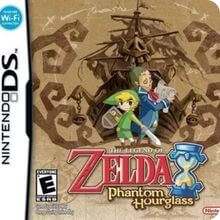
In this article, we will explore the game’s history, gameplay mechanics, unique features, FAQs, and why this title is still considered one of the must-play Nintendo DS games.
Release History and Popularity
The Legend of Zelda: Phantom Hourglass was first launched in Japan on June 1, 2007, followed by North America on October 1, 2007, and later worldwide. This game continued the Wind Waker storyline, using a cel-shaded art style but tailored to the DS’s smaller hardware.
- In Japan, the game sold over 302,000 copies in its first month, making it the top-selling title of that period.
- In the U.S., it sold 262,800 copies during launch week, immediately ranking among the most popular Nintendo DS releases.
- By March 2008, global sales had surpassed 4.13 million copies.
The game was later re-released digitally on the Wii U Virtual Console between 2015 and 2016, giving newer Zelda fans another opportunity to experience this title.
Core Gameplay of Phantom Hourglass
Like most Zelda games, the central focus in Phantom Hourglass is dungeon exploration, puzzle-solving, and combat. However, the touchscreen stylus controls were the game’s big innovation. Instead of traditional button inputs, players controlled Link almost entirely through the DS’s touchscreen and microphone features, making it one of the most unique entries in the series.
Here are the primary gameplay aspects that make the Nintendo DS version stand out:
Stylus-Controlled Movement
Link’s movement and sword strikes are performed by dragging or tapping with the stylus.
- Tap the screen to where you want Link to walk.
- Swipe the stylus to make Link swing his sword.
- Tap enemies directly to attack them.
Innovative Drawing and Puzzle Solving
The DS touchscreen doubles as a notebook for taking notes, drawing maps, and solving puzzles. Players can sketch paths, mark secret spots, or even connect symbols to unlock hidden mechanisms. This interactive puzzle-solving method became one of the game’s highlights.
Ship Navigation
Seafaring plays a crucial role, continuing the ocean exploration theme of The Wind Waker. With the stylus, players draw a path on the sea chart for Link’s ship, the S.S. Linebeck, to follow automatically. Later upgrades allow the ship to be equipped with cannons and salvage arms for treasure hunting.
The Phantom Hourglass Itself
At the heart of the story is the magical Phantom Hourglass, filled with Sand of Hours. This special timer lets Link explore the cursed Temple of the Ocean King without losing life energy. Each return to the temple requires careful time management and strategy, adding an element of tension to dungeon exploration.
Key Features of the Game
1. Social Interaction and NPCs
The game is rich with bustling villages and quirky characters. Conversations are navigated by tapping dialogue arrows, while the use of the stylus adds humor and flavor to interactions. Some NPCs even provide hints and mini-quests that enrich the overall story.
2. Items and Equipment
Classic Zelda items like the boomerang return, but this time the DS stylus makes them even more fun to use. Players literally “draw” boomerang flight paths on the touchscreen. Items like bombs, potions, and the bow remain important for combat and puzzle solving.
3. Real-Time Ship Battles
On the seas, combat isn’t just cinematic. Players can manually aim cannons at sea monsters, rocks, and enemy vessels as their ship sails along its charted path. Equipment upgrades such as customized ship parts add variety and replay value.
4. Salvaging Treasure
By using the Salvage Arm, players can retrieve hidden treasures from the ocean floor. Care must be taken, as sea obstacles and attacks can damage the arm. Repairs require rupees, but successful salvaging brings valuable prizes.
5. Dungeon Design
The highlight of any Zelda game is its dungeons, and Phantom Hourglass experiments with unique time-limited exploration. The Temple of the Ocean King requires stealth tactics to avoid powerful phantoms, ensuring players carefully plan each run.
Graphics and Sound
Visually, Phantom Hourglass uses bright cel-shaded 3D graphics adapted for the DS. The game maintains the cartoon-like style of The Wind Waker, which made it instantly recognizable to fans.
The soundtrack builds on traditional Zelda themes with lighter, adventurous tunes fitting its oceanic world. Sound effects such as wind gusts, crashing waves, and ship cannons make the handheld experience surprisingly immersive.
Multiplayer and Wi-Fi
When launched, the game supported Nintendo Wi-Fi Connection for online play. Players could engage in battles across unique maps. Although the official Wi-Fi service has since been discontinued, its multiplayer experimentation stood out among DS titles of that era.
Reception and Awards
- IGN, GameSpot, and GameSpy all hailed Phantom Hourglass as Nintendo DS Game of the Year (2007).
- Critics praised its seamless use of the DS hardware, creative dungeon puzzles, and charming storyline.
- Some criticism was directed at its online features, which were considered too simplistic, and at the time-limit mechanic in the Temple of the Ocean King.
Despite those minor drawbacks, Phantom Hourglass remains one of the best-reviewed handheld Zeldas ever.
FAQs About Phantom Hourglass
What is the purpose of the Phantom Hourglass?
It protects Link from the life-draining curse of the Temple of the Ocean King, allowing him to explore time-limited sections safely.
Is Phantom Hourglass still worth playing today?
Yes. Many fans rate it highly, often 8 or 9 out of 10, praising its unique controls and engaging story.
Spirit Tracks vs Phantom Hourglass – which is better?
- Spirit Tracks has stronger dungeons and mechanics.
- Phantom Hourglass excels with open-sea exploration and naval combat.
Both are worth playing depending on whether you prefer trains or ships as central mechanics.
Does Princess Zelda appear in Phantom Hourglass?
Yes, in her Tetra persona. The art style continues from The Wind Waker, keeping Zelda in her pirate disguise as she aids Link.
Why Phantom Hourglass is Still a Must-Play
The combination of Zelda’s classic formula with touchscreen innovation made Phantom Hourglass a benchmark for DS design creativity. It remains one of the best games for showcasing the Nintendo DS hardware while delivering a full-fledged Zelda adventure on the go.
- Fans of The Wind Waker should consider Phantom Hourglass mandatory, as it continues the story directly.
- Newcomers to the series will still enjoy its intuitive controls and charming presentation.
- Collectors and fans seeking the ROM download will find that this title stands out among DS emulation favorites, right alongside Mario Kart DS, Advance Wars, and Castlevania: Portrait of Ruin.
Conclusion
The Legend of Zelda: Phantom Hourglass is more than just a sequel—it’s a bold experiment that successfully brought the Zelda franchise into the handheld touchscreen era. Its fun mix of dungeon crawling, ship combat, touchscreen puzzles, and the unique time mechanic creates an unforgettable adventure. Whether you download the Nintendo DS ROM for nostalgia or to finally experience it for the first time, this game continues to prove why it earned its place among the greatest DS titles ever made.